Simple Sustainable Swaps: 15 Easy Ways to Start an Eco-Friendly Lifestyle
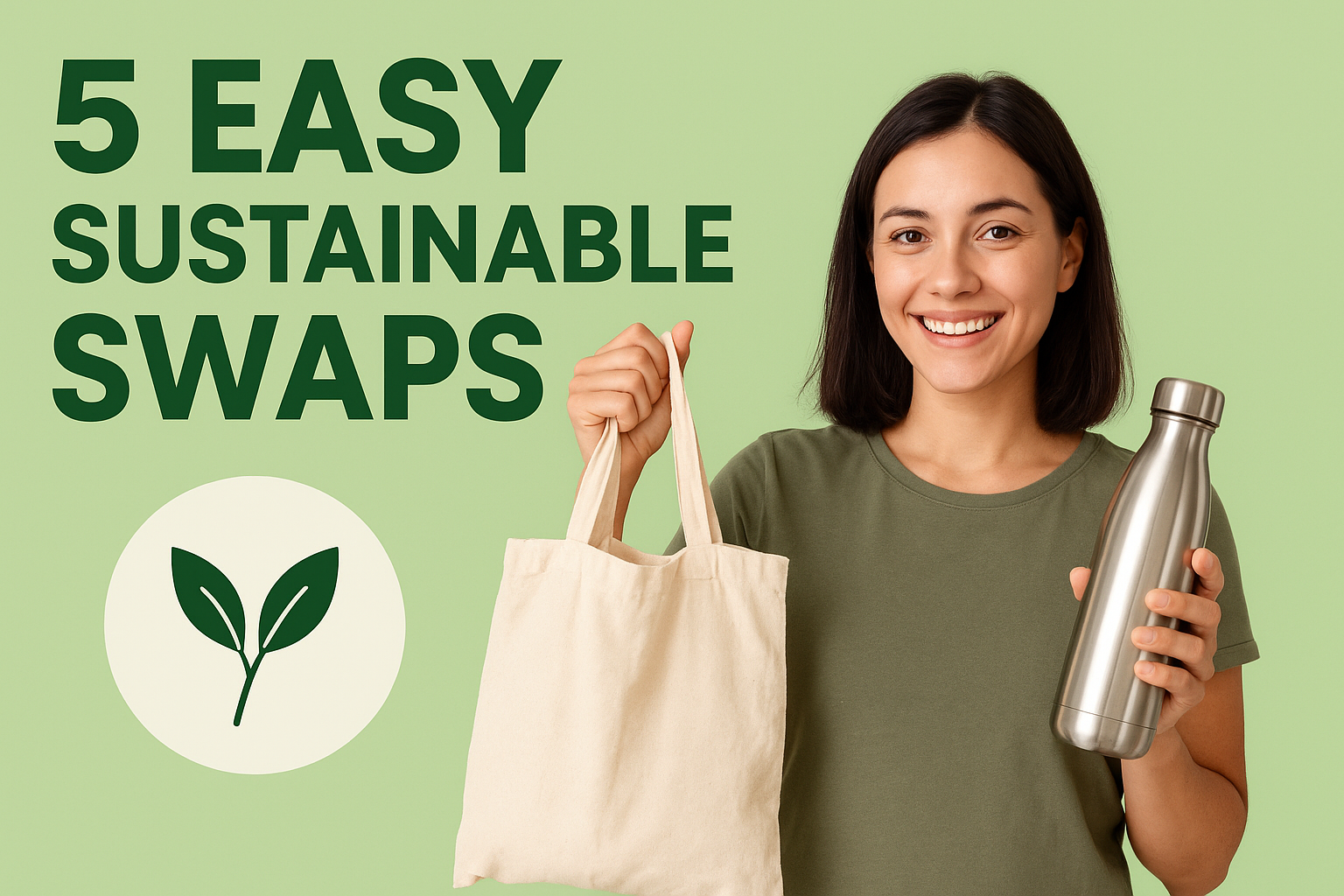
Living sustainably doesn’t have to be complicated. In fact, some of the most powerful environmental changes start with the smallest daily habits. Whether you’re new to the zero-waste movement or just want to reduce your plastic use, these simple sustainable swaps can help you live greener without sacrificing comfort or convenience.
In this guide, we’ll walk through five easy eco-friendly swaps you can start today all tested, practical, and cost-effective.
1. Switch to a Reusable Water Bottle
Every year, millions of plastic bottles end up in landfills or oceans. A single reusable water bottle can replace 150–200 disposable bottles per person annually.
Choosing a stainless-steel or glass bottle is one of the easiest ways to begin your sustainable living journey. Not only are they safer for your health, but they also keep water cooler for longer and reduce your long-term costs.
Quick Tip: Keep one bottle in your bag and refill at public water stations to avoid buying bottled water when you’re out.
2. Use Cloth Shopping Bags
Plastic bags are one of the biggest sources of non-biodegradable waste. Switching to cotton, canvas, or jute shopping bags is a simple yet powerful step toward a zero-waste lifestyle.
Reusable bags can last for months, even years, and you can wash them regularly to keep them fresh.
Pro Tip: Keep 2–3 folded in your car or backpack so you never forget them when you shop.
3. Replace Plastic Straws with Metal or Bamboo Ones
Plastic straws are tiny, but their environmental impact is massive. They take up to 200 years to break down and often end up harming marine life.
Instead, try metal, glass, or bamboo straws. They’re reusable, easy to clean, and perfect for smoothies, coffee, or cold drinks.
Bonus: They look cooler too great for home use or carrying in your travel kit.
4. Go Bamboo with Your Toothbrush
More than 1 billion plastic toothbrushes are thrown away each year globally. That’s roughly 50 million kilograms of plastic waste that never decomposes.
A bamboo toothbrush is a small, inexpensive change that helps reduce plastic waste dramatically. The bamboo handle is biodegradable, and many brands now use plant-based bristles.
Tip: Replace it every 3 months just like a normal toothbrush and compost the handle when done.
5. Start Composting Food Waste
If you want to see real change fast, start composting your kitchen waste. About 60% of household waste in India is biodegradable yet most of it ends up in landfills.
Setting up a small compost bin takes less than a day and can turn your fruit peels, coffee grounds, and leftovers into nutrient-rich soil for your plants.
6. Swap Paper Towels for Reusable Cloths
Paper towels are convenient but highly wasteful. Try replacing them with microfiber or cotton cloths that can be washed and reused hundreds of times. They’re more absorbent, cost-effective, and reduce deforestation caused by paper production.
Tip: Color-code your cloths one for the kitchen, one for cleaning surfaces, one for drying dishes.
7. Choose Refillable Products Over Single-Use Packaging
Many brands now offer refill stations or subscription refills for household products like detergents, shampoo, or hand wash. Refillable packaging cuts plastic waste and saves money in the long run.
Quick Example: Try brands like Bare Necessities or The Better Home that provide refill packs or bottle-return systems.
8. Carry Your Own Cutlery and Cup
If you often grab coffee or eat out, carrying a reusable steel straw, cup, and cutlery set can reduce your single-use waste massively. It’s lightweight, travel-friendly, and hygienic.
Pro Tip: Choose foldable sets that fit into your daily bag for office, travel, or picnics.
9. Replace Liquid Detergent with Soap Nuts or Eco Detergents
Traditional detergents contain harsh chemicals that pollute water systems. Soap nuts (reetha) or plant-based detergents are biodegradable and gentle on clothes and skin.
Bonus: They’re perfect for people with allergies or sensitive skin.
10. Buy Secondhand or Thrift Clothing
Fashion waste is one of the world’s biggest pollution sources. Thrifting and secondhand shopping keep clothes in circulation and reduce textile waste.
Try: Local thrift stores, or online platforms like Relove, Elanic, or OLX Fashion.
11. Use Beeswax Wraps Instead of Plastic Cling Film
Beeswax wraps are reusable, washable, and perfect for covering bowls or wrapping sandwiches. They last for months and can be composted after use.
DIY Option: Make your own beeswax wraps using cotton cloth and melted wax.
12. Switch to Digital Notes Instead of Paper
If you’re a student or work in an office, try digital tools like Google Keep, Notion, or GoodNotes to replace paper notebooks. It’s efficient, searchable, and eco-conscious.
Tip: For handwriting lovers, use reusable notebooks like Rocketbook that sync to cloud storage.
13. Choose Energy Efficient LED Lighting
Switching from CFLs to LED bulbs can reduce electricity usage by up to 80%. They last longer, emit less heat, and cut your power bills dramatically.
Pro Tip: Look for Energy Star-rated or BEE-certified bulbs for better efficiency.
14. Try Eco-Friendly Menstrual Products
Women can make a big sustainability impact by choosing menstrual cups, cloth pads, or biodegradable sanitary pads. These options save thousands of plastic pads from landfills.
Bonus: They’re comfortable, affordable, and safe for your body.
15. Grow Your Own Herbs at Home
Start a mini herb garden on your balcony or windowsill. Growing basil, mint, or coriander not only saves plastic packaging but also ensures pesticide-free food.
Tip: Use old containers or bottles as plant pots for a creative touch.
Getting Started:
- Keep a small compost bin near your kitchen sink.
- Add fruit and vegetable peels, paper, and coffee grounds.
- Avoid meat or dairy.
- Mix weekly and let it rest you’ll see compost in a few weeks.
Bonus Tip: Choose Solid Bars Over Liquid Soaps
Liquid soaps often come in plastic bottles that are rarely recycled. Try switching to solid soap bars or shampoo bars they last longer, create less waste, and are available in organic varieties that are gentler on your skin.
🌎 Why These Swaps Matter
Each of these eco-friendly changes may look small, but collectively they make a massive impact. A family of four can reduce over 500 kilograms of plastic waste annually just by adopting these simple habits.
Sustainable living isn’t about being perfect. It’s about making conscious choices consistently because those choices inspire others to follow.
💡 Final Thoughts
Living a more eco-friendly lifestyle doesn’t mean giving up convenience. It means choosing smarter, reusable, and planet-friendly options that help both you and the environment.
Start with one or two swaps this week. Once they become habits, add more. That’s how real change begins one refillable bottle, one cloth bag, and one bamboo brush at a time.
These 15 eco-friendly swaps are practical steps anyone can take to live sustainably. You don’t need to change your entire lifestyle overnight just start small. Each reusable bag, refillable bottle, and eco detergent brings us closer to a cleaner planet.







1 comment