🌍 2024: Global Temperatures Hit Record Highs
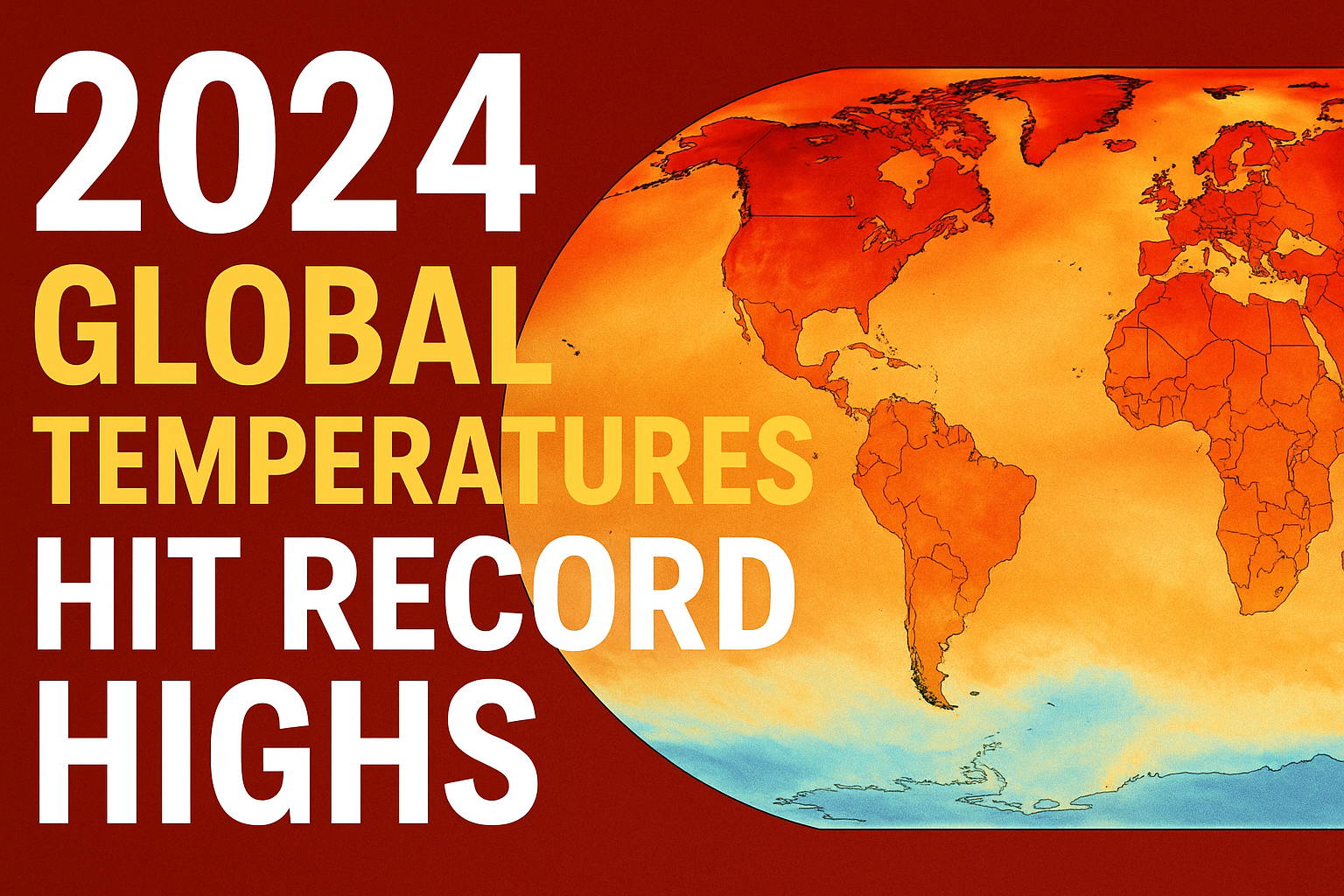
2024 will be remembered as the year our planet’s thermostat surged beyond expectations. Both land and ocean temperatures shattered previous records, leaving scientists, policymakers, and citizens alarmed. This isn’t just a weather story—it’s a clear signal about where our climate is heading.
Climate change has moved from prediction to lived reality. Rising heatwaves, ocean warming, and shifting weather patterns are no longer distant warnings. They’re here, they’re measurable, and they’re intensifying.
What Do Record-High Global Temperatures Mean?
When experts talk about “record highs,” they mean the average temperature across Earth’s surface, including land and ocean. In 2024, these averages climbed higher than at any other point in recorded history.
- Land: The hottest regions experienced severe heatwaves, with average anomalies exceeding +1.5°C compared to the pre-industrial baseline.
- Ocean: Sea surface temperatures reached unprecedented levels, fueling stronger storms and threatening marine ecosystems.
This matters because Earth’s climate system is interconnected. Heat on land affects agriculture, health, and ecosystems, while warm oceans disrupt fisheries, coral reefs, and global weather cycles.
Historical Context: How Did We Get Here?
- 1880s: Global temperature records began, with early averages serving as benchmarks.
- 1990s–2000s: Scientists began noticing consistent upward trends linked to greenhouse gas emissions.
- 2016: Considered the hottest year until recently, largely due to El Niño and human-driven warming.
- 2024: Surpassed all previous records, even accounting for natural variations like El Niño.
The trajectory is clear: the last decade has consistently ranked among the warmest on record, confirming the long-term trend.
Why 2024’s Heat Is Different
Unlike short-term spikes, the 2024 temperature rise is:
- Global, not regional. Nearly every continent recorded unusual warmth.
- Persistent. Elevated temperatures continued for months, not just days.
- Amplified by oceans. Marine heatwaves were widespread, affecting fisheries and ecosystems.
Scientists warn that crossing certain temperature thresholds may trigger tipping points, such as melting ice sheets and collapsing ecosystems.
Impacts of Record Temperatures
Human Health and Daily Life
- Increased risk of heatstroke and dehydration.
- Higher air pollution levels worsening asthma and respiratory diseases.
- Rising demand for electricity straining energy grids.
Agriculture and Food Security
- Crops like wheat, rice, and maize face reduced yields.
- Livestock heat stress affecting productivity.
- Greater reliance on irrigation and fertilizers, raising costs.
Oceans and Ecosystems
- Coral bleaching events expanded across the Pacific and Indian Oceans.
- Fish migration patterns disrupted global seafood supply chains.
- Accelerated melting of Arctic ice threatening polar species.
Misconceptions About Rising Temperatures
- “It’s just a hot year.” → False. Long-term data shows a consistent warming trend.
- “It’s natural climate variability.” → Partly true, but human-driven emissions are the primary cause.
- “Technology will fix it quickly.” → Emerging solutions help, but reducing emissions remains essential.
How We Can Respond
- Individuals: Reduce energy use, adopt sustainable diets, and support renewable energy.
- Governments: Enforce stricter emissions policies, invest in climate resilience, and push global agreements.
- Communities: Promote urban greening, water conservation, and disaster preparedness.
👉 Read more on sustainable living and climate adaptation strategies in our Green Earth section.
2024’s record-breaking land and ocean temperatures serve as a stark reminder: climate change is no longer abstract. It’s unfolding around us, faster than many expected. The choices we make today—at individual, community, and global levels—will decide whether the next decades bring resilience or catastrophe.
🌱 Your voice matters. Share this article, comment below with your thoughts, and explore our related posts on climate solutions.
2024 has marked a sobering milestone: both land and ocean temperatures worldwide have reached their highest levels ever documented. This surge has reignited global concern, casting a spotlight on the escalating climate crisis that’s reshaping environments, economies, and daily lives. Understanding why 2024’s temperature spike is trending helps clarify the urgent trajectory of Earth’s climate and why everyone—from policymakers to everyday citizens—should take notice.
Why 2024’s Temperature Records Matter
- The World Meteorological Organization (WMO) confirmed 2024 as the hottest year globally since records began.
- Global surface temperature averaged 1.55°C above pre-industrial levels—crossing, for the first time in a calendar year, the critical 1.5°C threshold from the Paris Agreement.
- Ocean temperatures set all-time highs, a key signal since oceans absorb about 90% of excess heat from global warming.
Understanding the Science: Definitions & Context
What Is Global Temperature Anomaly?
A global temperature anomaly represents the difference between actual yearly temperatures and a baseline “normal” (generally the 1850–1900 pre-industrial average). These records are essential to track warming trends and inform climate policies.
Setting the Stage: How Did We Get Here?
Over the last decade (2015–2024), every year has ranked among the top ten warmest recorded, with 2024 taking the lead. Factors include:
- Steady rise in greenhouse gas concentrations, notably carbon dioxide, which reached a new record in 2024.
- Recurring El Niño events, which temporarily heat ocean surfaces, compounded underlying warming.
- Accelerating land and ocean warming: Land areas warmed about twice as fast as oceans in 2024, with land average up by 2.28°C and ocean average up by 1.15°C since 1850–1900.
Key Climate Data and Trends
- In 2024, 32% of land and 21% of ocean areas saw their warmest year on record.
- No region on Earth had a record or near-record cold year.
Real-World Impacts of Record Heat
- Extreme weather events: Floods, wildfires, and hurricanes increased in severity, linked to higher global temperatures.
- Ocean warming led to marine heatwaves and coral bleaching, threatening global fisheries and food security.
- Millions faced intensified heat stress and health risks, with entire regions (North America, South America, Europe, Africa, Oceania) reporting their hottest years.
- Economic consequences included crop failures, energy demands, and infrastructural stress from high temperatures.
Pros, Cons, and Common Myths
Pros (Opportunities)
- Growing public awareness can drive climate policy and innovation (renewables, adaptation tech).
Cons
- Accelerated climate impacts: Sea-level rise, species loss, ecosystem failures.
- Economic and social disruption, especially in vulnerable communities.
Myths & Misconceptions
- Myth: “One warm year is natural fluctuation.”
Fact: 2024 continues an unmistakable trend—ten hottest years on record are the last decade. - Myth: “Land and ocean warming are the same.”
Fact: Land is warming twice as quickly as oceans. - Myth: “We can’t do anything about it.”
Fact: Policy and consumption choices can slow or amplify warming.
Frequently Asked Questions (FAQs)
Q1: Why did 2024 break temperature records globally?
A: A combination of record greenhouse gas concentrations and strong El Niño conditions fueled both land and ocean warming, magnifying long-term climate trends.
Q2: What does breaching the 1.5°C threshold mean?
A: Exceeding this Paris Agreement milestone in a calendar year signals severe climate risks—greater heatwaves, flooding, and loss of habitats.
Q3: Which areas were most affected?
A: 40% of humanity faced locally record heat in 2024; major nations like China, Brazil, Canada, and the U.S. saw unprecedented land temperatures.
Q4: Can ocean warming be reversed?
A: No, ocean warming and sea-level rise are, for practical purposes, irreversible for centuries—but drastic emission cuts can limit future damage.
Q5: What can be done to address record temperatures?
A: Rapid emission reductions, adaptation strategies, and investment in renewable energy and early warning systems are urgently needed.
Q6: What’s next if these trends continue?
A: More extreme weather, ecosystem disruptions, and adaptation costs will rise, urging global cooperation and innovation.
Conclusion & Call to Action
2024 stands as a new high-water mark in our living climate record—a powerful call demanding collective action and informed lifestyle shifts. Everyone’s choices, voices, and support for evidence-based climate strategies matter now more than ever.
Share this article, join the conversation below, and check our latest posts on climate solutions to be part of the change.
ClimateChange #GlobalWarming #Environment #Sustainability #OceanHeat #ClimateChange, #GlobalWarming, #RecordTemperatures, #2024Climate, #OceanWarming, #ClimateAction, #ParisAgreement, #ExtremeWeather



Post Comment