
India has once again recorded above-average rainfall this monsoon season, making it the second consecutive year of excess rains. The India Meteorological Department (IMD) has also warned that October 2025 is likely to witness heavy rains across many states. While rain is essential for agriculture and water security, back-to-back years of above-normal rainfall raise important questions: Is this a sign of shifting climate patterns? What will it mean for farmers, cities, and the economy? This article breaks down the causes, implications, and forecasts in a clear, practical way.
India Above Average Rainfall 2025: The Big Picture
According to the IMD, India has received 8% more rainfall than the long-period average this year. This follows last year’s trend, where rains also surpassed expectations. Two major factors explain this pattern:
- El Niño and La Niña cycles: Climate oscillations in the Pacific Ocean that strongly affect Indian monsoons.
- Warming oceans: The Bay of Bengal and Arabian Sea are generating more intense low-pressure systems.
Key takeaway: India’s rainfall is no longer predictable in neat cycles. Climate variability is intensifying rainfall extremes.
October 2025 Forecast: Why More Heavy Rains Are Coming
The IMD has projected above-normal rainfall for October, particularly in:
- Eastern and Northeastern states (Assam, Bihar, West Bengal)
- Central India (Madhya Pradesh, Chhattisgarh, Maharashtra)
- Southern India (Kerala, Karnataka, Andhra Pradesh)
This is unusual because October typically marks the retreat of the monsoon. Instead, the season is lingering longer, influenced by delayed withdrawal patterns.
Impact:
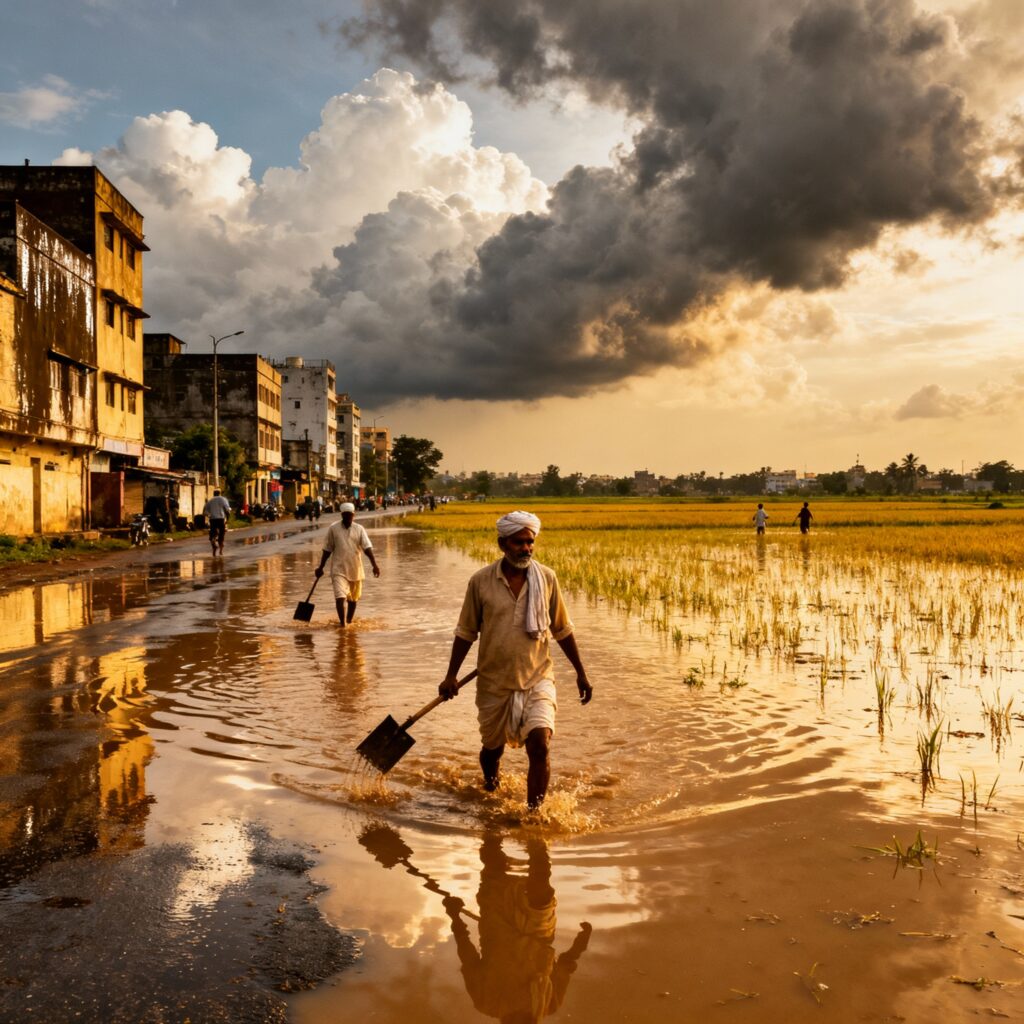
- Urban areas may face flooding and traffic disruptions.
- Farmers could benefit from extra soil moisture but also risk crop damage from waterlogging.
- Reservoirs will fill, improving hydropower and drinking water supply.
Why Consecutive Years of Heavy Rainfall Matter
1. Agriculture
- Boosts water for rice, sugarcane, and pulses.
- Risks crop destruction in low-lying farmlands.
- Farmers may face storage and drying challenges.
2. Economy
- Flood damages increase repair costs for infrastructure.
- Hydropower generation improves, reducing power shortages.
- Insurance claims rise due to flood-related losses.
3. Daily Life
- Urban flooding in cities like Mumbai, Chennai, and Bengaluru.
- Health risks rise with water-borne diseases like dengue, malaria, and cholera.
- Travel and transport delays affect work productivity.
Climate Change and Monsoon Uncertainty
Experts suggest that climate change is amplifying extreme weather in India:
- Rising sea-surface temperatures fuel stronger cyclones and rain systems.
- Monsoons are shifting in timing, often arriving late but staying longer.
- Regional differences are stark: while some areas drown in floods, others remain drought-hit.
For context, the World Meteorological Organization (WMO) and the IPCC reports confirm that South Asia is among the regions most vulnerable to erratic rainfall patterns (WMO Report).
What You Can Do to Prepare
- Stay Updated: Follow IMD forecasts and local advisories.
- Plan Farming Cycles: Farmers should consult agriculture extension services for adaptive cropping patterns.
- Urban Readiness: Keep emergency kits, charge devices, and prepare for possible waterlogging.
- Community Awareness: Support rainwater harvesting and local flood management measures.
India has experienced back-to-back years of above-average rainfall, a trend that is making headlines and raising important questions. While good rains often bring relief to farmers and boost crop yields, excessive or unseasonal showers can disrupt harvesting, flood cities, and strain infrastructure. According to weather forecasts, October 2025 is expected to continue with heavy rainfall, impacting multiple sectors from agriculture and trade to transportation and daily life.
In this article, we’ll break down what this unusual rainfall trend means, why it is happening, and how it affects India’s economy, farming communities, and the general public. By the end, you’ll gain a clearer picture of the opportunities and challenges posed by back-to-back wet years.
India’s Rainfall Trend: The Big Picture
India’s climate cycle largely revolves around the southwest monsoon, which usually accounts for 70-90% of annual rainfall. Typically extending from June to September, the monsoon is vital for agriculture and water resources across the country.
- 2024 Monsoon: Brought above-normal rainfall, leading to strong reservoir levels and bumper harvests but also unexpected floods in urban areas.
- 2025 Monsoon (current year): Once again, India has recorded above-average rainfall, with the trend expected to continue into October, which is usually a transition month towards the northeast monsoon.
Meteorologists suggest that factors like a strong Indian Ocean Dipole (IOD) and lingering La Niña effects may be amplifying monsoon activity.
Why Above-Average Rainfall Matters
Positive Impacts
- Boost for agriculture: Good rains ensure better soil moisture and irrigation for kharif crops like rice, maize, and pulses.
- Reservoir and groundwater recharge: Above-average rainfall strengthens India’s water security for hydroelectricity and drinking purposes.
- Rural economy support: A healthy monsoon improves farm income, driving consumption in rural markets.
Negative Impacts
- Flood risks: Overwhelming rainfall leads to floods, damaging infrastructure and disrupting lives.
- Crop damage during harvest: Heavy October rains may cause losses to standing crops like rice and cotton, affecting farmers’ earnings.
- Urban challenges: Cities face waterlogging, traffic jams, and increased disease risks due to stagnant water.
Heavy Rainfall in October: What to Expect
October is typically considered the retreating monsoon season. However, with forecasts suggesting another wet October, India must prepare for unusual weather stress.
- Agriculture: Farmers readying for rabi crop sowing could face challenges if fields remain waterlogged.
- Infrastructure: Extended rains increase risks of landslides in the Himalayan belt and water flooding in coastal areas.
- Public life: Cities like Mumbai, Kolkata, and Chennai may see prolonged waterlogging and transportation delays.
Impact Across Key Sectors
Agriculture and Farmers
Over 50% of India’s workforce depends on agriculture, making rainfall trends critical. Above-normal rain helped kharif crops grow well, but late-season showers could create harvesting difficulties, leading to grain losses.
Economy and Industry
A bumper harvest boosts the food supply, potentially easing inflation. However, frequent flooding damages infrastructure and disrupts industries like mining, construction, and transport, balancing out the benefits.
Energy and Power
Reservoirs filled by strong rainfall enhance hydropower generation and reduce dependency on coal—an environmental plus. But excess rains also risk dam overflows.
Government and Public Response
- Disaster Preparedness: State agencies are enhancing flood monitoring, early warning systems, and disaster response capabilities.
- Urban Planning Challenges: Cities need better drainage and flood-resilient infrastructure to handle future heavy rainfall events.
- Farmer Assistance: Government subsidies and crop insurance schemes are being pushed to cover losses from unseasonal rains.
Internal and External Resources
- For related insights on sustainable farming practices, check our [Guide to Smart Agriculture].
- Interested in climate trends? Explore our [Climate and Weather Updates].
- External reference: The India Meteorological Department (IMD) provides the latest rainfall and forecast details.
- Global weather context: The World Meteorological Organization (WMO) discusses El Niño and La Niña patterns shaping rainfall cycles.
Conclusion and Call-to-Action
India’s second consecutive year of above-average rainfall is a double-edged sword—offering water security while posing risks to urban life and agriculture. With heavy October rains forecasted, communities need to adapt with robust planning and disaster preparedness.
What do you think about India’s changing rainfall trends? Share your thoughts in the comments, or download our free Climate Impact Preparedness Checklist to stay better informed!
FAQ
Q: Why has India seen above-average rainfall in 2025?
A: The main reasons include ocean warming, delayed monsoon withdrawal, and global climate cycles like El Niño and La Niña.
Q: Which states will see heavy rains in October 2025?
A: Northeast, central, and southern states like Assam, Bihar, Madhya Pradesh, and Kerala are expected to see excess rains.
Q: How does above-normal rainfall affect farmers?
A: It provides more irrigation water but can also damage crops through flooding and waterlogging.
Q: Is climate change responsible for this shift?
A: While natural cycles play a role, climate change is amplifying rainfall intensity and unpredictability.
Q: How can cities reduce flooding risks?
A: By improving drainage systems, investing in flood-resilient infrastructure, and encouraging rainwater harvesting.
Q: Why is India receiving above-average rainfall for consecutive years?
A: Climate factors like the Indian Ocean Dipole and La Niña conditions have been amplifying the monsoon cycle.
Q: How does extended rainfall in October affect farmers?
A: It can delay harvesting, damage crops, and increase post-harvest losses despite good kharif growth earlier.
Q: What are the benefits of above-average rainfall?
A: It boosts crop productivity, recharges reservoirs, and strengthens hydropower generation.
Q: What are the risks to cities from prolonged rains?
A: Flooded streets, traffic jams, health hazards from waterlogging, and damage to drainage systems.
Q: Can above-average rainfall impact India’s economy?
A: Yes. While it supports agriculture and hydropower, floods and infrastructure damage can offset these gains.