AI in Public Health: How India’s Armed Forces Medical Services Is Transforming Diabetic Eye Care
AI in Public Health: How India’s Armed Forces Medical Services Is Transforming Diabetic Eye Care
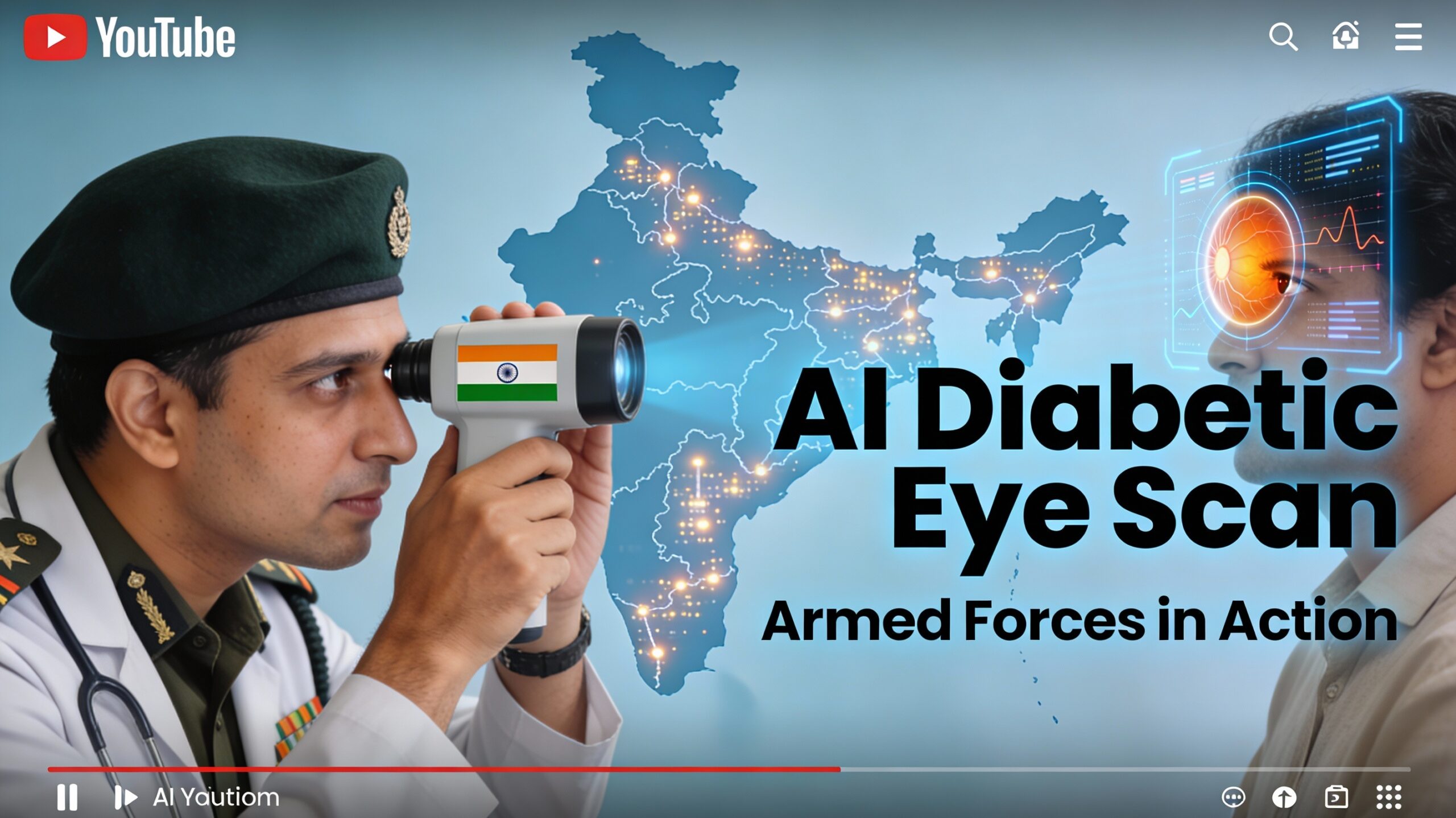
India is confronting an evolving health challenge. With one of the largest populations living with diabetes in the world, the risk of complications like diabetic retinopathy, an eye condition that can lead to irreversible vision loss, is rising. Recent efforts by the Armed Forces Medical Services (AFMS) aim to change that by using artificial intelligence (AI) for early diabetic eye screening in multiple Indian cities. This initiative marks a new chapter in India’s healthcare transformation, blending technology, public health, and preventive care. www.ndtv.com
Why Diabetic Retinopathy Matters
Diabetic retinopathy (DR) is a complication of diabetes that damages blood vessels in the retina. In its early stages, it can be symptom-free, making regular screening essential. Left undetected and untreated, DR can progress to severe vision loss and blindness. Traditional screening relies on specialists like ophthalmologists and vitreo-retina surgeons, but India has a limited number of these experts, especially outside major cities. This creates a gap in early detection and intervention. Asianet Newsable
The AFMS AI-Driven Screening Initiative
In December 2025, the Armed Forces Medical Services, in partnership with the Dr Rajendra Prasad Centre for Ophthalmic Sciences (RPC), All India Institute of Medical Sciences (AIIMS), and the eHealth AI Unit of the Ministry of Health and Family Welfare, launched India’s first AI-driven community screening programme for diabetic retinopathy. www.ndtv.com
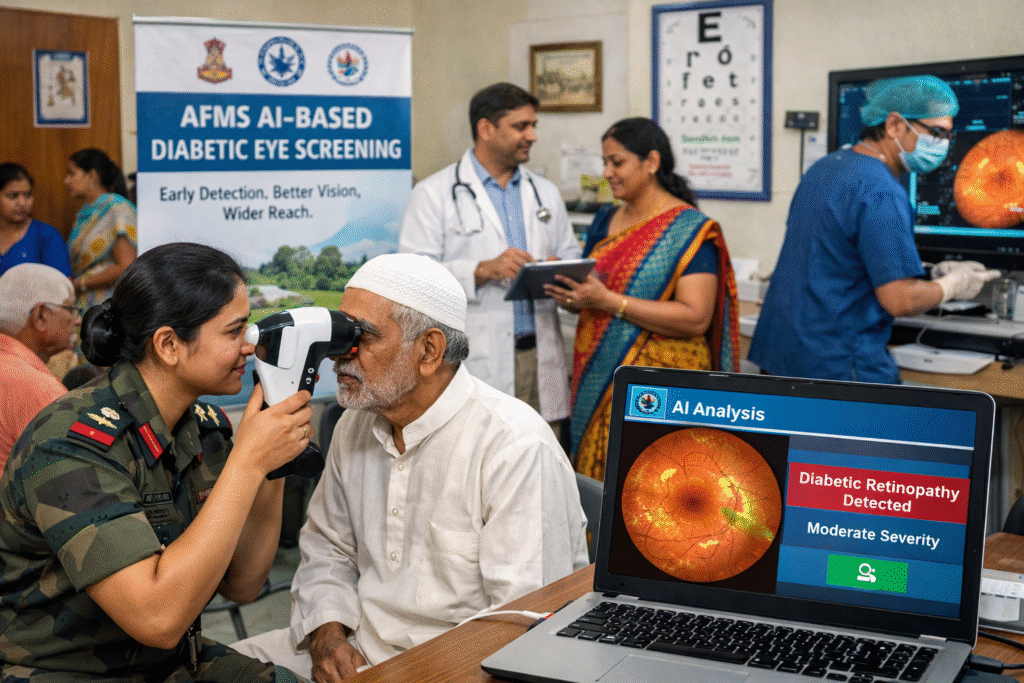
At the heart of this program is MadhuNetrAI, a web-based AI platform developed by AIIMS. The system uses advanced machine learning algorithms to analyze retinal images taken with portable fundus cameras, automate grading of disease severity, and triage patients based on risk. Trained medical officers, nurses, and health assistants can use this technology at community screening sites, even without a resident eye specialist. www.ndtv.com
Pilot Rollout Across Diverse Regions
The initiative’s pilot phase is already underway at seven locations, covering a mix of urban, rural, coastal, hilly, and remote regions:
Pune, Mumbai, Bengaluru, Dharamshala, Gaya, Jorhat, and Kochi. This geographic diversity ensures the programme reaches populations with vastly different healthcare access levels. www.ndtv.com
Each site includes hands-on training for healthcare workers conducted at RPC, AIIMS. The AI tool helps identify patients with early signs of DR. Those with standard or moderate disease are guided toward appropriate diabetes management, while patients with vision-threatening diabetic retinopathy (VTDR) are referred to vitreo-retina specialists at district hospitals. Local district health administrations coordinate these referral pathways to ensure continuity of care. www.ndtv.com
Public Health Impact and Early Detection
One of the most powerful features of this AI solution is real-time data generation. As images are screened, the system compiles information on disease prevalence and distribution. This data can help health planners understand patterns, improve outreach, and tailor interventions where they’re most needed. Such a health intelligence framework is a major leap beyond conventional screening methods. www.ndtv.com
Early detection of diabetic retinopathy can prevent up to 90 percent of vision loss cases, making programmes like this vital in reducing preventable blindness. In India, where millions may still be unaware of early retinal changes due to diabetes, accessible screening is a game changer. Facebook
The Role of AI in Healthcare Access and Equity
Using AI in diabetic eye screening supports broader goals in public health:
- Wider Access in Underserved Areas: AI allows trained community health workers to perform screenings, eliminating the need for patients to travel to tertiary hospitals with specialists.
- Efficiency and Scalability: Automated screening significantly speeds up diagnosis, enabling high-volume screening during camps, rural clinics, or routine health visits.
- Data-Driven Planning: Real-time results help governments allocate resources more effectively, targeting areas with high disease prevalence.
This public sector initiative shows that AI isn’t just a futuristic concept. It’s a practical tool that can be integrated into existing health systems to reach communities that historically have limited access to specialist care. www.ndtv.com
Challenges and Considerations
While this model has clear advantages, there are also challenges that come with integrating AI into healthcare:
- Training and Quality Control: Ensuring that all health workers can accurately use imaging equipment and interpret results is essential.
- Data Privacy: Handling sensitive patient health information responsibly will require robust digital safeguards.
- Sustainability: Scaling from pilot projects to nationwide programmes will need continued support from health agencies, funding, and infrastructure.
These are not unique to India; countries worldwide are grappling with similar issues as AI becomes more embedded in public health. Careful planning and ongoing evaluation will be key to long-term success.
What This Means for India’s Future
India’s experiment with AI-based diabetic eye screening represents a broader trend in how the public sector is adopting technology for preventive healthcare. It offers a blueprint for tackling other non-communicable diseases that require early detection and regular monitoring, such as cardiovascular disease or certain cancers. www.ndtv.com
By leveraging AI, local health workers can extend specialist-level diagnostics into communities that need them the most. Combining military precision, academic expertise, and government support, this project stands as a model for effective collaboration across sectors.
The AFMS rollout of AI-based diabetic eye screening is a significant step toward equitable healthcare delivery in India. It tackles a major cause of preventable blindness through early detection, brings advanced diagnostics to underserved areas, and uses data to strengthen public health planning. As AI continues to transform healthcare, this initiative shows how smart implementation and strong partnerships can deliver real benefits for millions of people living with diabetes.
India is rapidly adopting artificial intelligence in public healthcare to improve early diagnosis, reduce costs and expand access to quality care in underserved regions. Diabetic retinopathy (DR), a serious eye complication of diabetes and a leading cause of preventable blindness, has emerged as a prime use case for AI-driven screening due to its high prevalence and the shortage of specialist ophthalmologists.
The Armed Forces Medical Services have now become the first public sector institution in India to deploy an AI-driven community screening programme for DR, positioning the defence health system as a testbed for scalable, nation-wide digital health solutions. This initiative also aligns with broader goals under India’s digital health strategy, including real-time health intelligence and evidence-based policymaking.
What Is AI-Based Diabetic Eye Screening?
AI-based diabetic eye screening uses deep learning models to analyse retinal images for early signs of diabetic retinopathy and related complications. Instead of relying solely on in-person ophthalmologist examinations, the AI model processes high-resolution fundus photographs to detect microaneurysms, haemorrhages, exudates and other retinal changes that signal disease severity.
In the AFMS programme, handheld fundus cameras capture retinal images at community or primary-care settings, which are then uploaded to a web-based AI platform called MadhuNetrAI, developed by the Dr Rajendra Prasad Centre (RPC) at AIIMS. The tool automatically screens, grades and triages cases into categories such as “no DR”, “mild”, “moderate” or “sight‑threatening”, enabling quick referral to specialists where needed.
AFMS AI Programme: Scope, Cities and Partners
The AFMS AI-driven diabetic eye screening programme was inaugurated at Army Hospital (Research & Referral), New Delhi, in December 2025. It is being implemented in collaboration with:
- Dr Rajendra Prasad Centre for Ophthalmic Sciences (RPC), AIIMS, New Delhi
- The eHealth AI Unit of the Ministry of Health & Family Welfare (MoHFW)
During the pilot phase, the programme will run across seven diverse locations: Pune, Mumbai, Bengaluru, Dharamshala, Gaya, Jorhat and Kochi, representing metro, rural, hilly, coastal and remote settings. Trained medical officers, nursing personnel and healthcare assistants at these sites are being equipped to conduct AI-enabled screenings at scale, extending specialist-grade diagnostics beyond tertiary hospitals and into community spaces.
This spectrum of sites allows the government and armed forces to test AI performance across different demographic, ethnic and environmental profiles, strengthening the robustness and generalisability of the models.
How MadhuNetrAI Works: From Image to Insight
MadhuNetrAI is a web-based AI screening platform created by RPC, AIIMS, specifically for diabetic retinopathy community programmes. Its key functional steps include:
- Image acquisition: Trained staff capture retinal images using handheld fundus cameras in clinics, camps or community outreach events.
- Cloud-based upload: Images are securely uploaded to the MadhuNetrAI platform, where they are processed in real time.
- Automated grading: Deep learning algorithms classify images based on DR severity and flag cases needing urgent ophthalmology referral.
- Decision support: The system generates structured reports and triage suggestions that help primary-care teams decide which patients to refer, review or monitor.
Beyond individual diagnosis, MadhuNetrAI aggregates anonymised data into dashboards that show disease prevalence and geographic distribution in near real time, supporting national eye-health surveillance. This transforms screening from a patient-level service into a population-level intelligence tool for the public health system.
Why Diabetic Retinopathy Screening Matters in India
India has one of the world’s largest diabetes burdens, with estimates of more than 65 million people living with the condition. A significant proportion of these individuals are at risk of diabetic retinopathy, which can progress silently until vision loss occurs, especially in the absence of regular eye checks.
Traditional DR screening depends on specialist ophthalmologists and well-equipped eye clinics, which are often concentrated in urban areas and large hospitals. Rural, remote and low-resource settings struggle to provide annual retinal examinations for all diabetic patients, leading to late diagnosis and higher rates of preventable blindness.
AI-enabled community screening lowers these barriers by decentralising detection to primary-care and community sites, reducing dependence on specialists for the initial triage. This is particularly crucial for the armed forces, where personnel and dependents are located across varied terrains and operational settings, and rapid screening can protect vision and readiness.
Healthcare Benefits: Early Detection, Access and Cost Efficiency
The AFMS AI deployment brings multiple direct healthcare benefits:
- Early detection at scale: Automated analysis allows more people to be screened in a shorter time, increasing the probability that DR is detected before it causes irreversible vision damage.
- Improved access in remote areas: With handheld fundus cameras and AI triage, even facilities without an on-site ophthalmologist can participate in screening drives.
- Efficient use of specialists: Ophthalmologists can focus their time on moderate and severe cases flagged by the AI, rather than manually reviewing all screenings.
- Cost-effective screening: Community-level AI screening potentially reduces per-patient screening costs by lowering the need for repeated specialist visits and enabling targeted referrals.
For diabetic patients, this translates into less travel, reduced waiting times and faster access to sight-saving treatment when needed.
Public Sector Impact: Data, Policy and Governance
Beyond clinical care, the AFMS programme has far-reaching implications for the public sector and digital governance in India.
- Real-time health intelligence: MadhuNetrAI generates live data on DR prevalence and geographical hotspots, which can feed into national non-communicable disease (NCD) surveillance frameworks.
- Evidence-based policy: Policymakers can use this data to allocate resources, plan eye camps, prioritise high-burden districts and refine screening guidelines for diabetic populations.
- Integration with digital health infrastructure: The programme complements India’s broader digital health initiatives by showing how AI services can integrate with health records and telemedicine for specialist consultations.
For the armed forces specifically, such datasets can support better planning of medical resources, deployment of specialists, and long-term care strategies for personnel and families.
Training, Capacity Building and Workforce Transformation
A core feature of the AFMS AI initiative is structured training for front-line health workers. Medical officers, nursing staff and healthcare assistants from pilot sites undergo intensive training at RPC, AIIMS, on:
- Operating handheld fundus cameras in diverse field conditions
- Capturing high-quality retinal images for AI analysis
- Interpreting AI-generated reports and triage recommendations
- Counselling patients about follow-up, treatment and lifestyle modifications
This upskilling transforms non-specialist staff into effective first-line screeners, expanding the screening workforce without needing a proportional increase in ophthalmologists. It also familiarises public-sector health teams with AI tools, building digital readiness for future deployments in other disease areas like hypertension-related eye disease or glaucoma.
Challenges and Ethical Considerations
Despite its promise, AI-based diabetic eye screening in the public sector raises important challenges:
- Data quality and bias: AI performance depends heavily on diverse, high-quality training datasets; if under-represented groups are not adequately captured, misclassification risks increase.
- Connectivity and infrastructure: Handheld devices and web-based platforms require reliable electricity, internet access and secure data storage, which can be uneven across remote regions.
- Data privacy and security: Retinal images and health information must be protected under stringent privacy norms, with clear consent, storage and access policies.
- Human oversight: AI recommendations must remain decision-support tools, with final clinical judgement resting with trained professionals to avoid over-reliance on algorithms.
The AFMS model, with strong collaboration between military hospitals, AIIMS and the MoHFW, provides a governance framework that other public programmes can emulate to mitigate these risks.
Future of AI in Indian Healthcare and the Public Sector
The AI diabetic eye screening project is likely to act as a reference blueprint for future AI deployments across Indian public healthcare. Success at AFMS pilot sites could encourage:
- Expansion to more defence establishments and civilian Health & Wellness Centres under the national primary healthcare network
- Integration with tele-ophthalmology and telemedicine platforms for remote consultations
- Adaptation of the AI framework to screen for other conditions, such as hypertensive retinopathy or age-related macular degeneration
- Incorporation of AI screening metrics into national health dashboards and NCD control programmes
This positions India as a regional leader in AI-driven public health, demonstrating how defence health systems, academic centres and government AI units can co-create scalable digital health models.




1 comment