Generative AI in 2025
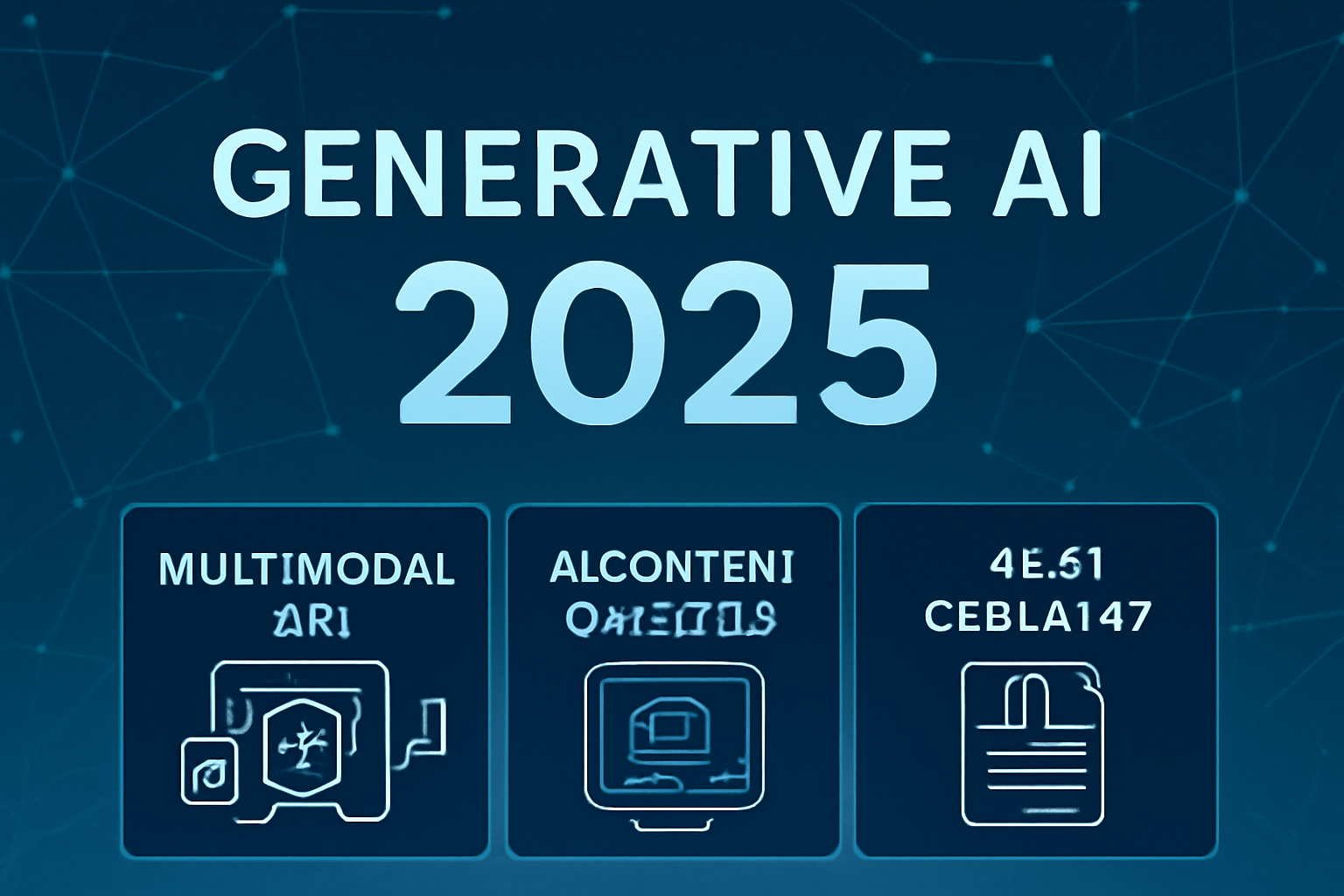
Generative AI in 2025: The Rise of Multimodal Models, Business Use Cases, and Future Job Skills
Generative AI has rapidly advanced from producing simple text and images to powering multimodal models that can understand, process, and generate content across text, images, audio, and even video—all at the same time. As we move through 2025, this technology is transforming how creators, businesses, and professionals innovate, automate, and compete in the digital age.
What is Generative AI?
Generative AI refers to artificial intelligence systems that create content—such as text, code, images, video, audio, and even 3D models—based on data they have been trained on. Early models focused on one modality (e.g., just text), but today’s leading AI systems are multimodal, capable of blending and cross-referencing various data types for highly contextual outputs.
Multimodal Models: AI That Sees, Hears, and Speaks
What Are Multimodal AI Models?
Multimodal models are advanced AI systems trained to understand and generate content using several types of input and output, such as reading text, analyzing images, listening to sound, or even interpreting video all together. Recent innovations—like OpenAI’s GPT-4o, Google’s Gemini, and Meta’s Llama 4—enable AI to, for example, look at a picture, generate a caption, read your spoken question, and reply with both text and images in a seamless interaction.
Why Multimodality Matters
- Richer User Experiences: AI can now caption images, summarize video scenes, and compose music based on a text prompt.
- Smarter Automation: Multimodal AI helps drive self-driving cars (combining visual, auditory, and contextual data), enhances medical diagnostics, and enables virtual assistants that “see” and “hear.”
- Hyper-Personalization: Businesses use AI to generate unique marketing creatives, interactive product experiences, and tailored recommendations for each user in real time.
Top Use Cases for Creators and Businesses
Content Creation and Marketing
- Automated Writing: Generative AI creates blog posts, social media content, product descriptions, and email campaigns quickly and at scale.
- Visual Design and Video: AI tools now generate high-quality graphics, marketing videos, and even 3D mockups or avatars, helping both solo creators and marketing teams boost productivity.
- Personalized Campaigns: AI analyzes audience data and generates hyper-personalized ads, landing pages, and promotional material, dramatically improving engagement.
Entertainment and Media
- Filmmakers use generative AI for storyboarding, virtual character creation, and soundtrack composition.
- Video game developers leverage AI-driven NPC dialog, virtual worlds, and adaptive soundtracks.
E-commerce
- AI powers virtual try-ons with generated imagery, unique product recommendations, and even personalized product visuals for each shopper.
Enterprise Productivity
- Virtual Assistants: Multimodal virtual assistants automate scheduling, document creation, customer support, and more.
- Synthetic Data for Training: Generative AI can create synthetic datasets—such as medical images—helping train other AI systems while protecting privacy.
In-Demand Job Skills for the AI-Powered Future
With the rapid growth of generative AI, employers are seeking professionals skilled in the following areas for 2025 and beyond:
| Skill | Why It Matters |
|---|---|
| Machine Learning | Building and optimizing AI models for content generation, automation, and analytics |
| Natural Language Processing (NLP) | Enabling chatbots, virtual assistants, and sentiment analysis tools |
| Computer Vision | Powering image and video interpretation for AV/VR, healthcare, and E-commerce |
| Prompt Engineering | Designing effective queries and instructions for AI systems to get high-quality outputs |
| AI Ethics & Governance | Guiding responsible development and deployment of advanced AI systems |
| Creativity & Innovation | Augmenting human creativity with AI co-pilots for brainstorming and content ideation |
| Data Science | Analyzing and leveraging big data to uncover trends and drive business insights |
| Adaptability & Learning | Keeping up with evolving AI tools and best practices by embracing continuous learning |
Non-technical skills like critical thinking, adaptability, and ethical judgment are also highly valued because AI workflows require human oversight and creative direction
Conclusion
Generative AI especially the rise of powerful multimodal models is revolutionizing how creators and businesses operate, automating creative and analytical tasks, making content more personalized, and shaping an entirely new set of in-demand job skills. For anyone looking to stay relevant, learning how to harness these technologies and understanding their ethical implications will be key to thriving in tomorrow’s digital economy.


Post Comment