Multimodal & Beyond-Text Models,The Future of AI That Sees and Hears
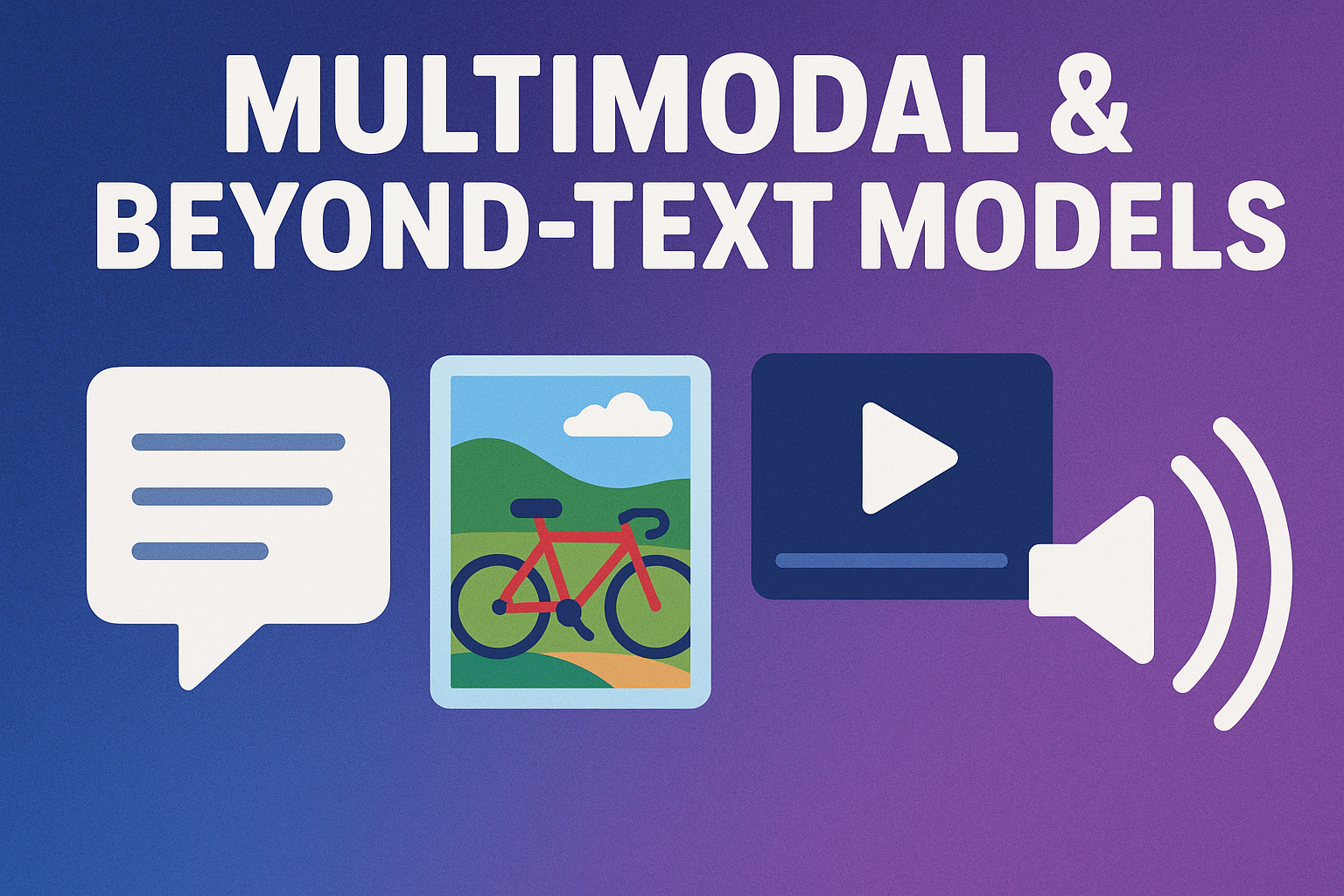
What multimodal AI is, why it matters, how it works, real-world uses, risks, and where it’s headed.
Intro the shift from text-only to senses-on
For most of AI’s recent history the story was about text: large language models that read and write. Today’s frontier is multimodal AI systems that process and generate across multiple data types (text, images, audio, video, and their combinations). Instead of answering only from text, these models can look at a photo and explain it, watch a video and summarize action, or take voice input and produce a suitable image. That change makes AI far more useful for real-world tasks where signals are inherently mixed. arXiv+1
What “multimodal” actually means
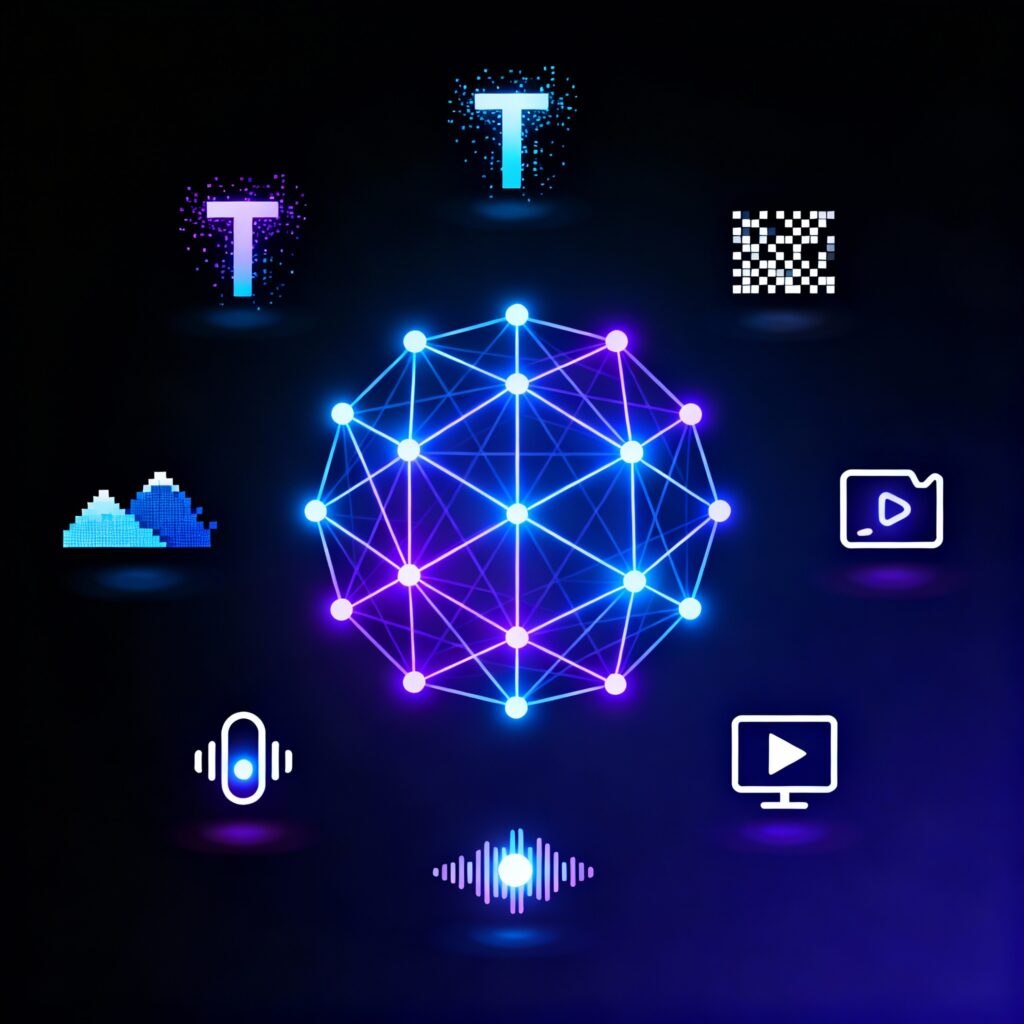
A multimodal model has one or more of the following characteristics:
- It accepts multiple input modalities (for example image + text or audio + video + text).
- It performs tasks that require aligning meaning across modalities, such as visual question answering, image captioning, speech-to-text with context, or video understanding.
- It can generate across modalities (text-to-image, text-to-audio, image-to-text, even video generation).
Research and product examples range from vision-language models like CLIP and Flamingo to large multimodal systems such as OpenAI’s GPT multimodal variants and recent LLM releases from major companies. These systems rely on encoders that turn each modality into representations a central model can reason over. Proceedings of Machine Learning Research+1
Core building blocks — how they work (simple view)
- Encoders for each modality. Images, audio, and video are mapped into vector representations using CNNs, transformers, or specialized audio encoders.
- A shared representation space. Models learn to align vectors from different modalities so that similar concepts are close together — e.g., the caption “a red bike” maps near images of red bicycles. CLIP pioneered large-scale image-text alignment. Proceedings of Machine Learning Research
- A backbone reasoning model. Often a large language model or multimodal transformer sits on top and performs reasoning, generation, or instruction following with that aligned representation. GPT-style models are commonly used as the “brain.” OpenAI
- Pretraining + finetuning. Massive pretraining on internet-scale multimodal corpora followed by targeted fine-tuning or instruction tuning for tasks such as VQA (visual question answering), captioning, or multimodal dialogue. arXiv
Practical capabilities — what current multimodal systems can do
Multimodal systems today can:
- Describe images and answer questions about them (visual question answering).
- Generate images from text prompts and, increasingly, video from text.
- Extract text from images (OCR) and reason about it in context.
- Perform audio understanding (speech recognition, speaker identification) and generate speech.
- Support multimodal agents that combine perception with action (for example, a system that reads visual instructions and executes step-by-step help).
Companies and research labs are shipping multimodal products and models regularly — from OpenAI’s multimodal GPT family to Meta, Amazon, and others pushing multimodal foundation models and services. These releases show the technology is rapidly moving from lab demos to production tools. OpenAI+2Reuters+2
Real-world applications (why it matters)
- Healthcare: combining medical images, patient notes, and labs to assist diagnosis and reports. Early studies show multimodal approaches can improve clinical decision workflows. PMC
- Search & accessibility: richer search over images/video and improved screen-reader descriptions for visually impaired users.
- Creative tools: faster image/video generation, multimodal storyboarding, and voice-driven content creation.
- Customer service & automation: analyze screenshots, call recordings, and chat text together to resolve issues.
- Robotics & agents: vision + language lets robots interpret instructions and react to visual context.
These examples show how integrating modalities unlocks applications that text-only models could not deliver efficiently.

Key technical and social challenges
- Data scale and bias. Multimodal training requires huge paired datasets (image-caption, video-transcript, etc.). Those datasets inherit biases from the web; aligning modalities can amplify those biases. Proceedings of Machine Learning Research
- Evaluation difficulty. Measuring reasoning across modalities is harder than single-modality benchmarks; new metrics and benchmarks are still maturing. arXiv
- Safety and hallucination. Models can confidently generate incorrect visual descriptions or fabricate details when given ambiguous inputs. That’s risky in high-stakes domains like medicine or law. arXiv
- Compute and environmental cost. Training and serving large multimodal models is resource intensive. This raises cost and sustainability questions.
- Privacy and consent. Images and videos used in training might contain people who didn’t consent to that use; deployment must respect privacy laws and norms.
Responsible deployment — best practices
Researchers and teams are adopting several mitigations:
- Curate and document training datasets; remove sensitive or non-consensual content where possible.
- Use content filters and uncertainty estimates to reduce confidently wrong outputs.
- Build human-in-the-loop review for high-risk outputs (medical, legal).
- Provide clear user guidance and provenance metadata (show model confidence and source when appropriate). ResearchGate+1
Beyond Text to a World of Sight, Sound, and Understanding
For years, when we thought of Artificial Intelligence, we imagined chatbots and text generators. Models like GPT-3 dazzled us with their command of language. But human intelligence isn’t based on words alone. We experience the world through a symphony of senses—sight, sound, and language, intertwined.
Enter the next evolutionary leap: Multimodal AI.
This isn’t just an incremental upgrade; it’s a fundamental shift from AI that reads to AI that understands and creates across multiple modalities like images, video, audio, and text. In this deep dive, we’ll explore what multimodal models are, how they work, their groundbreaking applications, and the ethical considerations they bring.
What Are Multimodal AI Models? A Simple Definition
At its core, a multimodal AI model is an artificial intelligence system designed to process and integrate information from more than one type of data source (or “modality”).
Think of it like this:
- A text-only model is a brilliant scholar who has only ever read books.
- A multimodal model is a well-rounded expert who has read books, traveled the world, watched films, and listened to music.
This fusion of “senses” allows the AI to develop a much richer, more nuanced understanding of context, much like a human does.
How Do Multimodal AI Systems Work? The Technical Magic
The secret sauce behind these models is a concept called cross-modal learning. The goal is to find a shared, meaningful representation for different types of data. Here’s a simplified breakdown:
- Encoding: Each input modality is converted into a numerical representation (a vector embedding). An image is processed by a computer vision network (like CLIP), text by a language model, and audio by an audio-specific network. Each is transformed into a vector in a high-dimensional space.
- Alignment & Fusion: This is the critical step. The model learns to align these different vectors. For instance, it learns that the vector for a picture of a “dog” is semantically close to the vector for the word “dog.” By fusing these aligned representations, the model creates a unified understanding that connects the visual concept with the textual label.
- Reasoning & Generation: With this fused understanding, the model can perform complex tasks. It can answer questions about an image, generate a image from a text description, or even create a video based on an audio cue.
Frameworks like Google’s Pathways vision are built specifically for this kind of flexible, multi-task learning across modalities.
Groundbreaking Applications: Multimodal AI in Action
The potential of these models is transforming entire industries. Here are some of the most exciting real-world applications:
1. Revolutionizing Creative Industries
- AI Image Generators: Tools like Midjourney, DALL-E 3, and Stable Diffusion are prime examples. You provide a text “prompt,” and the model generates a stunning, original image. This is a direct text-to-image multimodal task.
- Video and Music Generation: Emerging tools can create short video clips from text or generate music based on a mood description.
2. Supercharging Accessibility
- Visual Assistance for the Visually Impaired: Apps like Microsoft’s Seeing AI use a smartphone camera to read documents, identify currency, describe scenes, and recognize people, providing auditory descriptions of the visual world.
- Automatic Captioning and Transcription: Models can watch a video and not only transcribe the speech but also describe relevant sounds and on-screen action, making content accessible to the deaf and hard-of-hearing community.
3. Transforming Healthcare
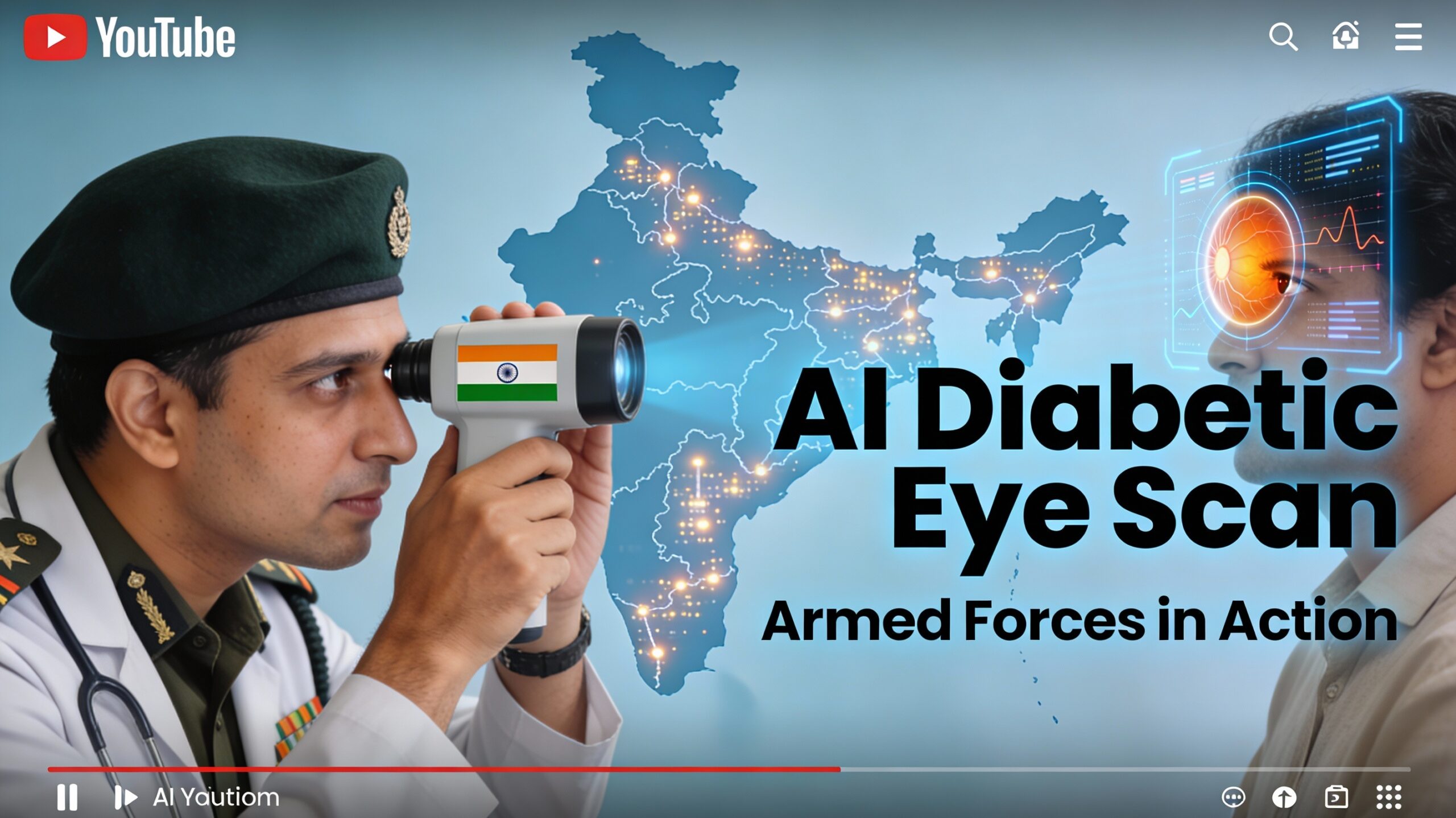
- Medical Imaging Diagnostics: Multimodal models can analyze a patient’s X-ray (image) alongside their medical history and doctor’s notes (text) to provide a more accurate diagnosis, spotting patterns that might be missed by a single-modality analysis.
4. The Next Generation of Search
Imagine taking a picture of a flower and asking your phone, “What kind of flower is this, and how do I care for it?” This is multimodal search. Google and other tech giants are heavily investing in AI that can understand queries combining text, image, and voice simultaneously.
5. Advanced AI Assistants
The future of assistants like Siri, Alexa, and Google Assistant is multimodal. They will move beyond simple voice commands to understand when you show them a broken part and ask, “How do I fix this?” while processing both the visual input and the spoken question.
Key Models Powering the Multimodal Revolution
- GPT-4V (Vision): OpenAI’s model that can understand and reason about images provided by the user, answering complex questions about them.
- CLIP (Contrastive Language-Image Pre-training): A foundational model from OpenAI that learned to connect images and text from the web, forming the backbone of many image generation and understanding systems.
- Flamingo & CM3 (Google): Early and influential research models that demonstrated powerful few-shot learning capabilities across vision and language tasks.
- Gemini (Google): Designed from the ground up to be natively multimodal, capable of seamlessly understanding and combining information from text, code, images, audio, and video.
The Challenges and Ethical Considerations
With great power comes great responsibility. The rise of multimodal AI presents significant challenges:
- Bias and Fairness: If these models are trained on biased internet data, they can perpetuate and even amplify stereotypes across multiple modalities (e.g., generating images that reinforce gender or racial biases).
- Misinformation and Deepfakes: The ability to generate highly realistic images, video, and audio from simple text prompts poses a severe threat. Creating convincing deepfakes for malicious purposes becomes dangerously easy.
- Hallucinations: Just like text-only models, multimodal AI can “hallucinate” details—confidently stating something is in an image that isn’t there, leading to potential misinformation.
- Privacy: Models that can analyze video feeds and audio recordings raise serious questions about surveillance and data privacy.
The Future is Multimodal
We are standing at the precipice of a new era in computing. Multimodal AI represents a fundamental step towards building machines that understand our world with a depth and context that was previously the exclusive domain of human intelligence.
As this technology continues to evolve, the line between human and machine creativity, perception, and understanding will continue to blur. The key will be to guide this development responsibly, ensuring that these powerful tools are used to augment human potential, foster creativity, and solve complex problems, all while navigating the ethical landscape with care.
The future of AI isn’t just about reading words—it’s about seeing, hearing, and comprehending the whole picture.
Radford et al., Learning Transferable Visual Models From Natural Language Supervision (CLIP). Proceedings of Machine Learning Research
Survey: A Survey on Multimodal Large Language Models (Yin et al., 2024). arXiv
OpenAI: “Hello GPT-4o” / GPT multimodal announcements. OpenAI
Reuters coverage of Meta’s Llama 4 and multimodal pushes. Reuters
Amazon and industry updates on Nova multimodal models (The Verge). The Verge
Sources & Further Reading:
- OpenAI: “CLIP: Connecting Text and Images”
- Google AI Blog: “Pathways: A next-generation AI architecture”
- DeepMind: “Flamingo: a Visual Language Model for Few-Shot Learning”
- Microsoft Research: “Towards a Universal Vision-Language Model”
- Radford et al., Learning Transferable Visual Models From Natural Language Supervision (CLIP). Proceedings of Machine Learning Research
- Survey: A Survey on Multimodal Large Language Models (Yin et al., 2024). arXiv
- OpenAI: “Hello GPT-4o” / GPT multimodal announcements. OpenAI
- Reuters coverage of Meta’s Llama 4 and multimodal pushes. Reuters
- Amazon and industry updates on Nova multimodal models (The Verge). The Verge



Post Comment