Top 10 Emerging Technologies Shaping the Future
Technology is moving faster than ever. What once seemed like science fiction is quickly becoming part of our everyday lives. From intelligent machines that learn on their own to breakthroughs in medicine and sustainable energy, emerging technologies are reshaping the way we live, work, and solve global challenges.
According to recent global tech forecasts, more than 70% of new economic value created in the next decade will come from emerging technologies. Businesses, governments, and researchers are investing heavily in innovations that promise to transform industries and create entirely new opportunities.
In this article, we’ll explore the top 10 emerging technologies that are shaping the future, how they work, why they matter, and where they are already making an impact.
1. Artificial Intelligence (AI)
What is Artificial Intelligence?
Artificial Intelligence refers to computer systems designed to perform tasks that typically require human intelligence, such as learning, decision-making, language understanding, and problem-solving.
AI includes technologies like:
- Machine Learning
- Natural Language Processing
- Computer Vision
- Generative AI
Why AI Is Transforming Everything
AI is now integrated into nearly every industry.
Examples include:
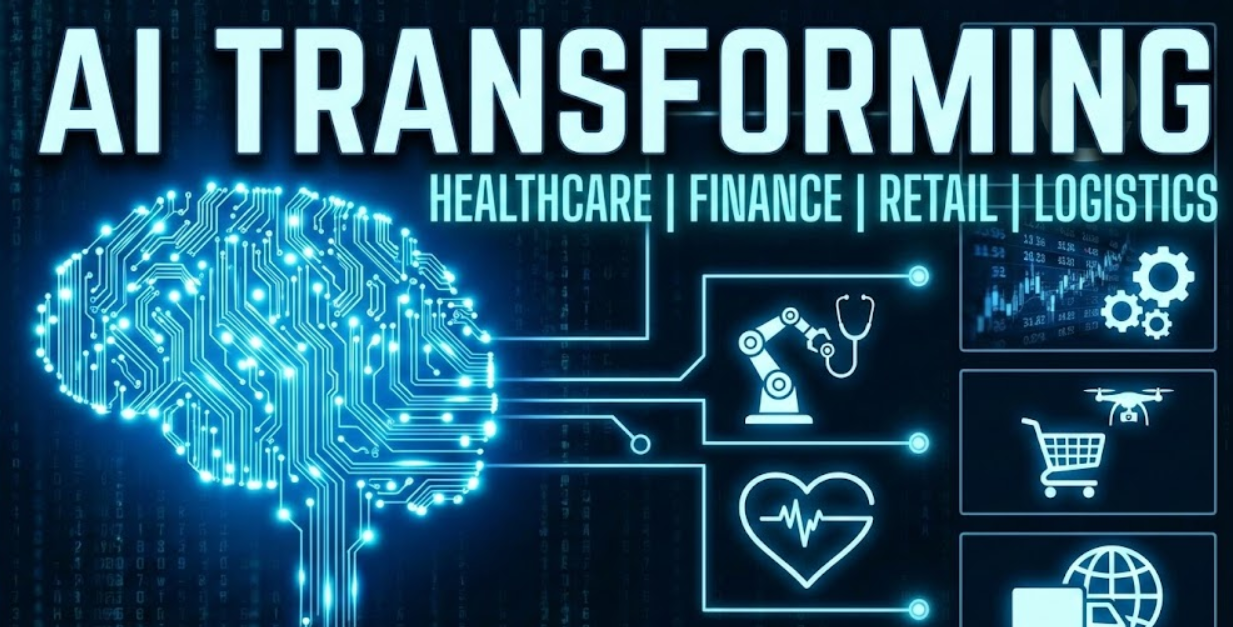
- Healthcare: AI analyzes medical images to detect diseases earlier.
- Finance: Algorithms detect fraud in milliseconds.
- Retail: AI recommends products based on user behavior.
According to a 2025 industry report, AI could contribute over $15 trillion to the global economy by 2030.
Pros
- Faster decision making
- Automation of repetitive tasks
- Improved data analysis
Challenges
- Ethical concerns
- Job displacement fears
- Data privacy risks
2. Quantum Computing
Understanding Quantum Computing
Quantum computers use the principles of quantum mechanics to process information much faster than traditional computers.
Instead of binary bits (0 or 1), quantum computers use qubits, which can exist in multiple states simultaneously.
Why It Matters
Quantum computing has the potential to solve problems that are impossible for today’s computers.
Possible applications:
- Drug discovery
- Climate modeling
- Cryptography
- Financial optimization
Major companies like IBM, Google, and Microsoft are investing billions into quantum research.
3. Robotics and Autonomous Systems
Robotics has moved far beyond factory automation. Modern robots are becoming smarter, more adaptable, and capable of working alongside humans.
Where Robotics Is Used
| Industry | Application |
|---|---|
| Manufacturing | Automated assembly |
| Healthcare | Surgical robots |
| Logistics | Warehouse automation |
| Agriculture | Precision farming |
Self-driving vehicles and delivery robots are also becoming increasingly common.
4. Biotechnology and Genetic Engineering
Biotechnology combines biology with technology to develop new medical treatments, agricultural solutions, and environmental innovations.
Key Developments
- CRISPR gene editing
- Personalized medicine
- Synthetic biology
- Lab-grown organs
These breakthroughs are helping scientists fight diseases like cancer, genetic disorders, and rare conditions.
Example: Researchers are now exploring gene therapy to cure inherited diseases instead of only treating symptoms.
5. Green Technology (Clean Energy)
As climate change becomes a global priority, green technologies are growing rapidly.
Important Areas of Green Tech
- Solar energy
- Wind power
- Energy storage
- Carbon capture
- Sustainable agriculture
Countries worldwide are investing heavily in renewable energy systems to reduce carbon emissions.
Benefits
- Lower environmental impact
- Renewable energy sources
- Sustainable development
6. Internet of Things (IoT)
The Internet of Things refers to a network of connected devices that communicate and share data.
Examples include:
- Smart homes
- Connected cars
- Wearable health devices
- Industrial sensors
It’s estimated that more than 30 billion IoT devices will be connected worldwide by 2030.
These devices allow real-time monitoring and automation.
7. Extended Reality (AR, VR, and MR)
Extended Reality (XR) combines Augmented Reality, Virtual Reality, and Mixed Reality.
These technologies create immersive digital experiences.
Real-world uses
- Medical training simulations
- Virtual tourism
- Remote collaboration
- Gaming and entertainment
Businesses are also using VR for employee training and product design.
8. Blockchain Technology
Blockchain is a decentralized digital ledger that records transactions securely and transparently.
While best known for cryptocurrencies, blockchain has many other uses.
Applications include:
- Secure financial transactions
- Supply chain tracking
- Digital identity systems
- Smart contracts
Industries are adopting blockchain to improve transparency and reduce fraud.
9. Edge Computing
Edge computing processes data closer to where it is generated rather than sending it to distant data centers.
This reduces latency and improves performance.
Example
In autonomous vehicles, decisions must happen instantly. Edge computing allows cars to process data locally instead of relying on remote servers.
10. Advanced Materials and Nanotechnology
Nanotechnology involves manipulating matter at the atomic and molecular scale.
Scientists are developing new materials that are:
- Stronger
- Lighter
- More efficient
Examples include:
- Self-healing materials
- Ultra-efficient batteries
- Graphene-based electronics
These innovations could revolutionize manufacturing, medicine, and energy.
Current Trends in Emerging Technology
Some major trends shaping the technology landscape include:
- Increased investment in AI startups
- Governments funding quantum research
- Rapid growth of renewable energy technologies
- Expansion of automation and robotics
Global technology investment surpassed $2 trillion in 2025, highlighting the importance of innovation.
Common Myths About Emerging Technologies
Myth 1: AI will completely replace humans
Reality: AI is more likely to augment human work rather than replace it entirely.
Myth 2: Quantum computers will replace normal computers
Reality: Quantum computers will handle specific complex problems, not everyday tasks.
Myth 3: Green technology is too expensive
Reality: Renewable energy costs have dropped dramatically in the last decade.
Real-World Case Studies
Tesla and Autonomous Driving
Tesla uses advanced AI and machine learning to develop self-driving capabilities in electric vehicles.
CRISPR Gene Editing
Scientists are using CRISPR to explore cures for genetic diseases such as sickle cell anemia.
Amazon Robotics
Amazon warehouses use thousands of robots to automate inventory and logistics.
Quick Comparison of Emerging Technologies
| Technology | Key Impact | Industries |
|---|---|---|
| Artificial Intelligence | Automation and decision-making | Healthcare, finance |
| Quantum Computing | Extreme computational power | Research, cryptography |
| Robotics | Automation | Manufacturing |
| Biotechnology | Medical breakthroughs | Healthcare |
| Green Technology | Sustainability | Energy |
| IoT | Connected systems | Smart homes |
| XR | Immersive experiences | Education |
| Blockchain | Secure transactions | Finance |
| Edge Computing | Faster data processing | Autonomous systems |
| Nanotechnology | Advanced materials | Electronics |
FAQs
What are emerging technologies?
Emerging technologies are new or rapidly developing innovations that have the potential to significantly impact industries, economies, and everyday life.
Why are emerging technologies important?
They drive innovation, improve efficiency, create new industries, and help solve major global challenges like climate change and disease.
Which emerging technology will grow the fastest?
Artificial Intelligence is expected to grow the fastest due to its applications across nearly every industry.
How will emerging technologies affect jobs?
While some jobs may disappear due to automation, many new roles will emerge in areas like AI development, data science, robotics engineering, and cybersecurity.
Is quantum computing already being used?
Yes, but mostly in research labs and experimental environments. Practical large-scale applications are still being developed.
Featured Snippet (Answer Box – 70–90 words)
Emerging technologies such as artificial intelligence, quantum computing, robotics, biotechnology, and green technology are transforming industries and shaping the future. These innovations enable smarter automation, faster data processing, advanced medical treatments, and sustainable energy solutions. Businesses and governments are investing heavily in these technologies because they drive economic growth, improve efficiency, and address global challenges like climate change and healthcare. As these technologies continue to develop, they will significantly influence how people live, work, and interact with the world.
Conclusion
Emerging technologies are not just shaping the future. They are already transforming the present. From intelligent machines and advanced medicine to sustainable energy systems, these innovations are solving complex global problems while creating new opportunities for businesses and individuals.
The next decade will likely bring even more breakthroughs as research, investment, and collaboration accelerate across the world.
If you want to stay ahead of technological change, understanding these emerging trends is essential.
Call to Action
If you found this article useful, share it with others who are interested in the future of technology. You can also explore our other posts on AI, innovation, and digital transformation.




Post Comment